
Pillars of Forest and Village: The Many Roles of Rural Indigenous Women

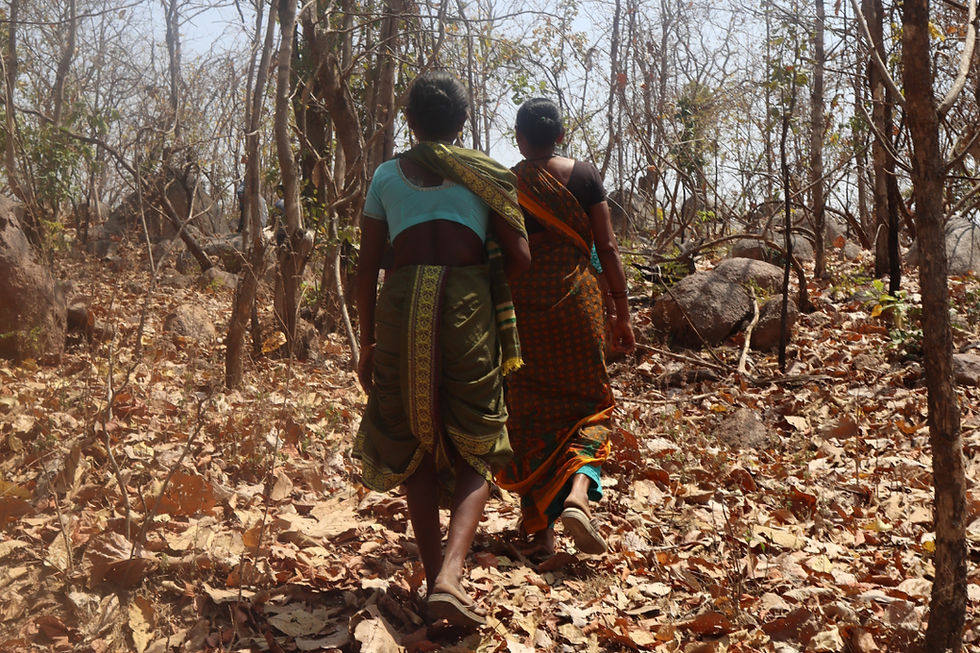
When we picture a rural woman, mainstream narratives often reduce her to a single, static image: a farm labourer working under the punishing sun. Yet, across the forest landscapes of Madhya Pradesh and Telangana, Gond, Sahariya, and Chenchu women sustain the entire fabric of rural life, serving as the primary anchors of household survival, community wellbeing, and ecological health. As Gond women from Panna ask with quiet conviction, "If we don't protect the forest, who will?"
An Indigenous Woman is never just a farmer or labourer. Across Dhaatri’s field areas, women lead multi-dimensional lives.
Their leadership begins as stewards of forest biodiversity. In Adilabad, Kolam women have mapped over 100 varieties of native flora and fauna to build community registers, cultivating indigenous nurseries of mahua, amla and bamboo. As foragers, Indigenous women gather seasonal wild foods using ancestral gathering practices that preserve plant regeneration and maintain forest health while ensuring food security for their families.

Yet, top-down fortress conservation models continue to restrict their customary forest access. A crucial step forward is the legal recognition of Community Forest Rights (CFR) and Habitat Rights under the Forest Rights Act (FRA), ensuring women can continue to protect and manage native ecosystems. As a Chenchu elder from the Nallamala forest reminds us: "When we live in the forest, the forest is thick; when we are removed, it becomes thin."

Beyond the forest boundary, they are ecosystem restorers. In Panna, after being relocated without proper rehabilitation from the tiger reserve, Gond women took on the task of clearing boulders in fallow lands given as compensation a decade ago. Today, these restored fields yield mustard, jowar, and tur that helped stop seasonal migration. To sustain these efforts, public resources and climate action funds must be channelled directly into community-identified agroecology, land restoration and groundwater recharge rather than commercial afforestation.

This stewardship naturally extends into civic and community leadership. Indigenous women engage directly with local government officials to represent community priorities. They dialogue with local governance for entitlements and documents, whether social security schemes or tenurial rights or raising collective demands to address emergency challenges like heatwaves. Creating pathways for women’s meaningful participation in local governance leads to the vision of gender equality and stronger social safety nets.
At the centre of it all, they remain the guardians of community health and nutrition. Applying analog forestry methods, women cultivate homestead gardens that feed our Indigenous children in Bal Angans and provide sustained dietary care for mine workers battling silicotuberculosis. Preventing occupational hazards like Silicosis, setting up medical facilities for health screenings, Silicosis certificates and rehabilitation are essential for supporting these women in their caregiving roles.
On this International Day of Rural Women, honouring Indigenous Women means moving beyond token recognition. It requires backing their self-determination with formal land rights, access to ecological resources, and institutional support.


